ईश कृपा बिल्डिंग, 16/1/1 साउथ तुकोगंज, राजशाही होटल के पास एवं Superspeciality अस्पताल के सामने, इंदौर (452001)
Call: +91-9167154735, +91-9826419771, 07314959487
Email: totalfertilitysolutions@gmail.com

Blastocyst Single Embryo Transfer (SET) is a highly developed IVF treatment that helps achieve pregnancy and minimize the risks of multiple pregnancies. In this method of IVF, only one healthy embryo that has reached the blastocyst stage (day 5 or day 6) is transferred into the uterus.
At Total Fertility Solutions, advanced IVF technology allows embryologists to select the most viable embryo with the highest implantation potential. This approach helps improve pregnancy success rates while reducing risks.
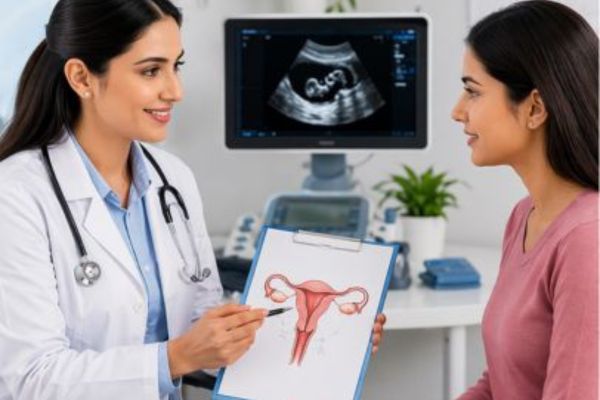
A fertility treatment where a selected embryo in its blastocyst stage is transferred into the uterus during an IVF cycle.
The blastocyst stage occurs five or six days after fertilization, allowing for advanced development.
At this stage, the embryo possesses significantly more potential for successful implantation.
Embryologists can better assess the quality and select the healthiest embryo for transfer.
The process is meticulously monitored to ensure optimal outcomes for every patient.The process is meticulously monitored to ensure optimal outcomes for every patient. Each step is carefully planned and tracked using advanced diagnostic tools and regular assessments to ensure the treatment is progressing as expected.
Embryos are kept in culture for 5-6 days to reach the blastocyst stage.
We select the single embryo with the highest implantation potential.
The blastocyst is transferred via a thin, comfortable catheter.
Hormone and pregnancy tests are conducted after 10-14 days.

Couples currently undergoing IVF treatment or women with high-quality embryos.
Patients wanting to avoid the risks associated with multiple or twin pregnancies.
Patients who have failed previous attempts at IVF and want a safer, optimized outcome.
Your specialist will assess your medical history to determine if this is the best option for you.
Selecting the right clinic is the most important factor in your IVF success.
It is an IVF technique where one high-quality embryo at the blastocyst stage is transferred into the uterus to improve implantation chances.
It reduces the risk of multiple pregnancies (twins/triplets) while maintaining excellent success rates.
The primary goal of eSET is to significantly reduce the risk of multiple pregnancies (twins or triplets), which carry higher risks of complications like premature birth and low birth weight, while maintaining a high chance of a healthy live birth.
A blastocyst is an embryo that has been cultured for 5 to 6 days. By this stage, it has developed into a complex structure of about 100–150 cells, allowing embryologists to better identify which embryo has the highest potential for successful implantation.
It is typically recommended for patients with a good prognosis, those under 35, or those who have high-quality blastocysts available. However, it is increasingly used for all age groups to ensure the safest pregnancy outcome.
While transferring two embryos might slightly increase the pregnancy rate for that specific cycle, the cumulative success rate (using frozen embryos in subsequent transfers) remains the same, with far fewer medical risks to the mother and baby.
Yes, there is a small chance (roughly 1–2%) that a single embryo can split after transfer, resulting in identical twins. However, this risk is much lower than the risk of fraternal twins when transferring two separate embryos.
It often has higher implantation rates because the embryo has survived a critical development window in the lab.
The transfer is typically performed 5 to 6 days after egg fertilization.